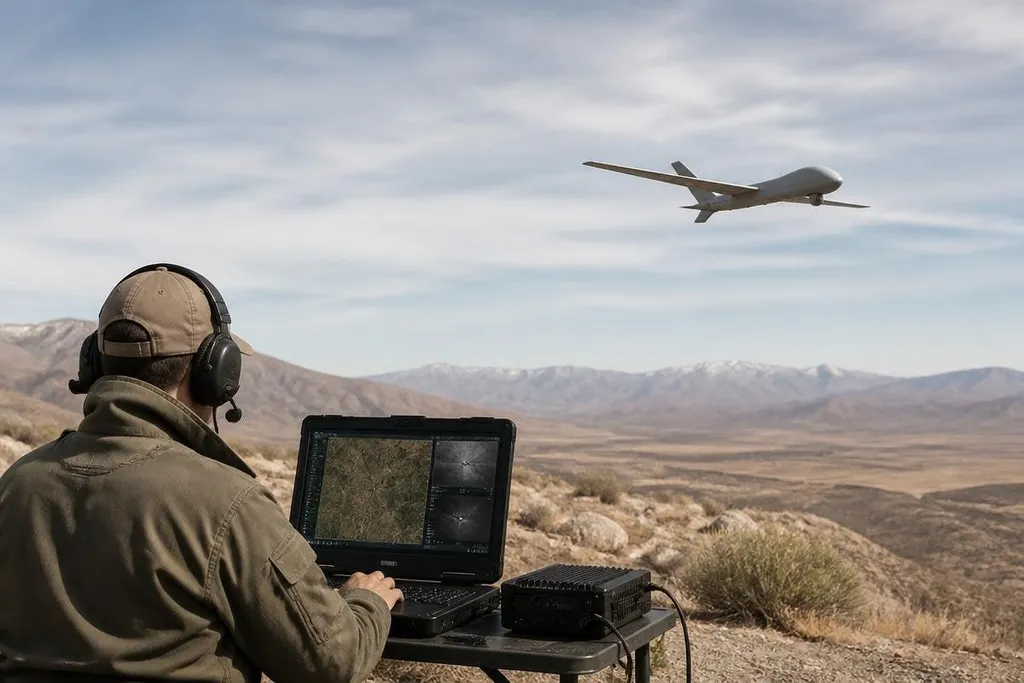
A defense drone can now sort camera images, follow a moving object, and plan a route while its operator watches from far away. The change comes from software running beside familiar hardware: cameras, thermal sensors, GPS, inertial measurement units, radios, and onboard computers.
For defense teams, the useful question is narrower than whether AI is powerful. It is which tasks the software can handle safely when links fail, sensors disagree, or people need to make a fast decision.
- Onboard processing cuts the need to send every video frame to a remote operator.
- Sensor fusion joins camera, thermal, GPS, and motion data into one working view.
- Human control remains necessary for many decisions involving force or uncertain targets.
What AI does on the aircraft
A drone’s sensors produce more data than one operator can watch at once. Computer vision software can sort objects in an image, mark movement, and follow a selected vehicle or person across changing camera views.
That work is often done at the edge, meaning on the drone rather than in a distant data center. An onboard processor can flag a possible object before sending a smaller amount of information through the radio link, which matters when bandwidth is limited or the signal is blocked.
AI can also help with route planning. A drone may combine terrain data, GPS readings, altitude, and its own motion to choose a path around obstacles. The quality of that path depends on the sensors and the software model, so a route that works in open ground may fail near buildings, smoke, trees, or heavy electronic interference.
Where autonomy helps operators
Autonomy can reduce the number of manual actions needed during a flight. A drone may hold its position, return to a planned point, keep a camera aimed at a moving object, or adjust its route after detecting an obstacle.
Those functions give the operator more time to assess the wider situation. They also reduce the workload that comes from controlling several aircraft at once, though the operator still needs a clear view of what the software has detected and why it changed course.
Sensor fusion adds another layer. A visible-light camera may struggle at night, while a thermal sensor can show heat differences without giving the same detail as daylight video. Combining those inputs can help the system sort objects, but it can also create a false result when weather, dust, camouflage, or damaged sensors distort the data.
A heat image can show a vehicle at night, but it can’t tell an operator why that vehicle is there. A report from Robot24 can place the drone’s sensor, weather, distance, and human response beside the AI claim. Those details matter before the next section looks at where combat autonomy stops working.
The limits of AI in combat systems
AI does not understand a scene in the same way a trained person does. It matches sensor patterns to data used during training, and those patterns can break when the setting changes.
A model may misread a shadow, lose a vehicle behind a wall, or confuse a civilian object with a military one. Radio interference can remove the operator’s view, while a damaged camera can leave the software working from incomplete information.
That makes system design as important as the model. Teams need logs, clear alerts, manual controls, safe return behavior, and checks that show when the software lacks enough data. My view is plain: AI should reduce routine flight work, while people retain control over decisions that can cause harm.
The legal and command rules matter too. A drone that can identify an object is not automatically allowed to act on that identification. Human review, mission limits, and recorded decisions help define who is responsible when the software is wrong.
What to check before buying or deploying
A defense team assessing an AI drone should ask:
- Where does processing happen? Check which tasks run onboard and which need a remote link.
- What sensors feed the model? List the camera types, thermal hardware, GPS, motion sensors, and their limits.
- How does it fail? Confirm the response to lost signals, low battery, blocked cameras, and conflicting sensor data.
- Can an operator take control? Look for a clear manual override and a record of control changes.
- What data trained the model? Ask whether the training conditions match the terrain, weather, lighting, and objects in the mission.
- How are updates checked? Require testing after changes to software, sensors, or mission rules.
These questions shift attention from a short demonstration to the conditions that decide whether the drone works outside a controlled flight. A system that performs well in clear weather may need a different model, sensor mix, or operating limit in dust, darkness, or dense urban areas.
The next stage will depend on verification, not on adding AI to every flight function. Defense drones will be useful when their software shows its confidence, reports its limits, and gives people enough control to stop a bad decision before it becomes an action.